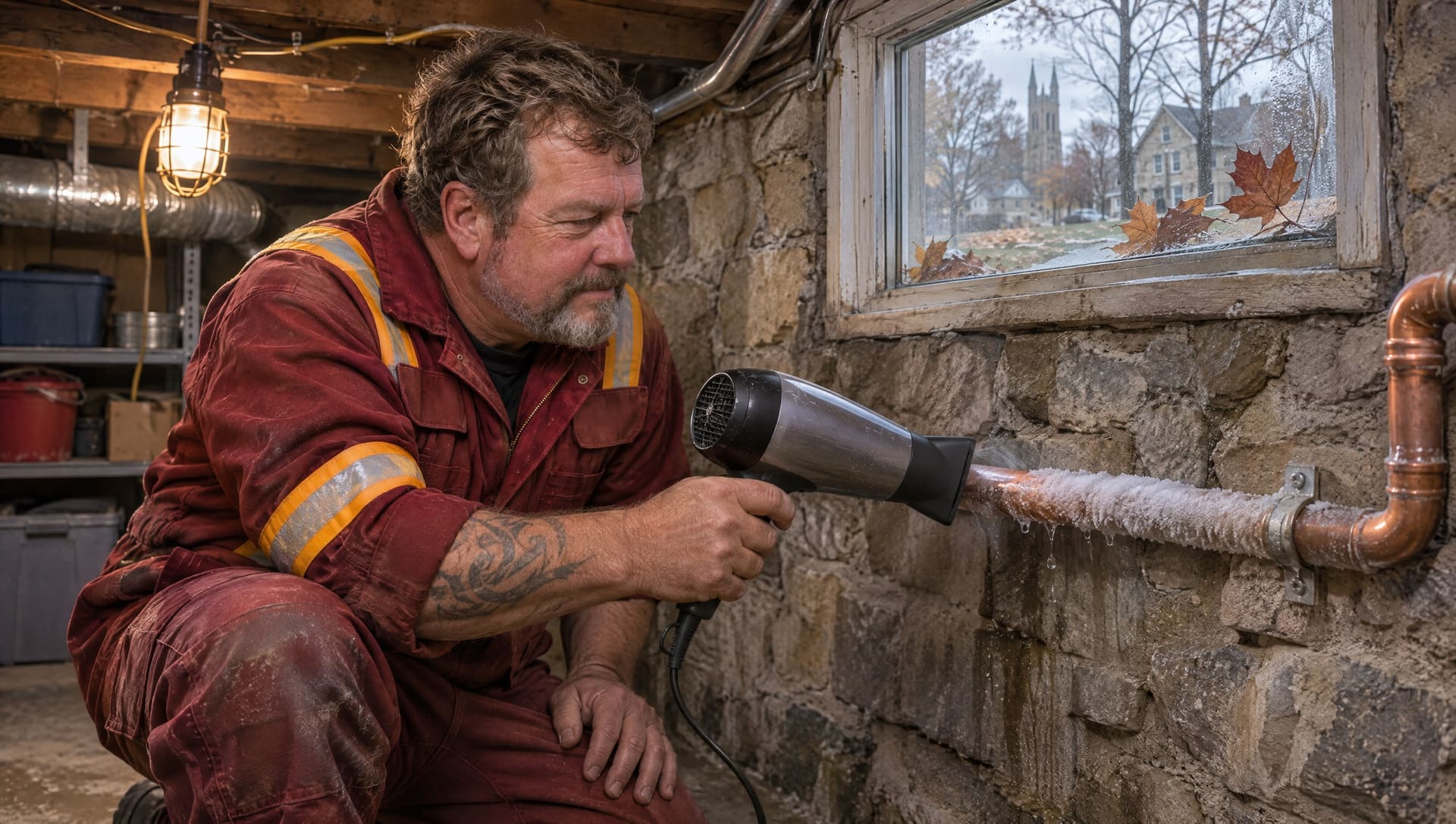
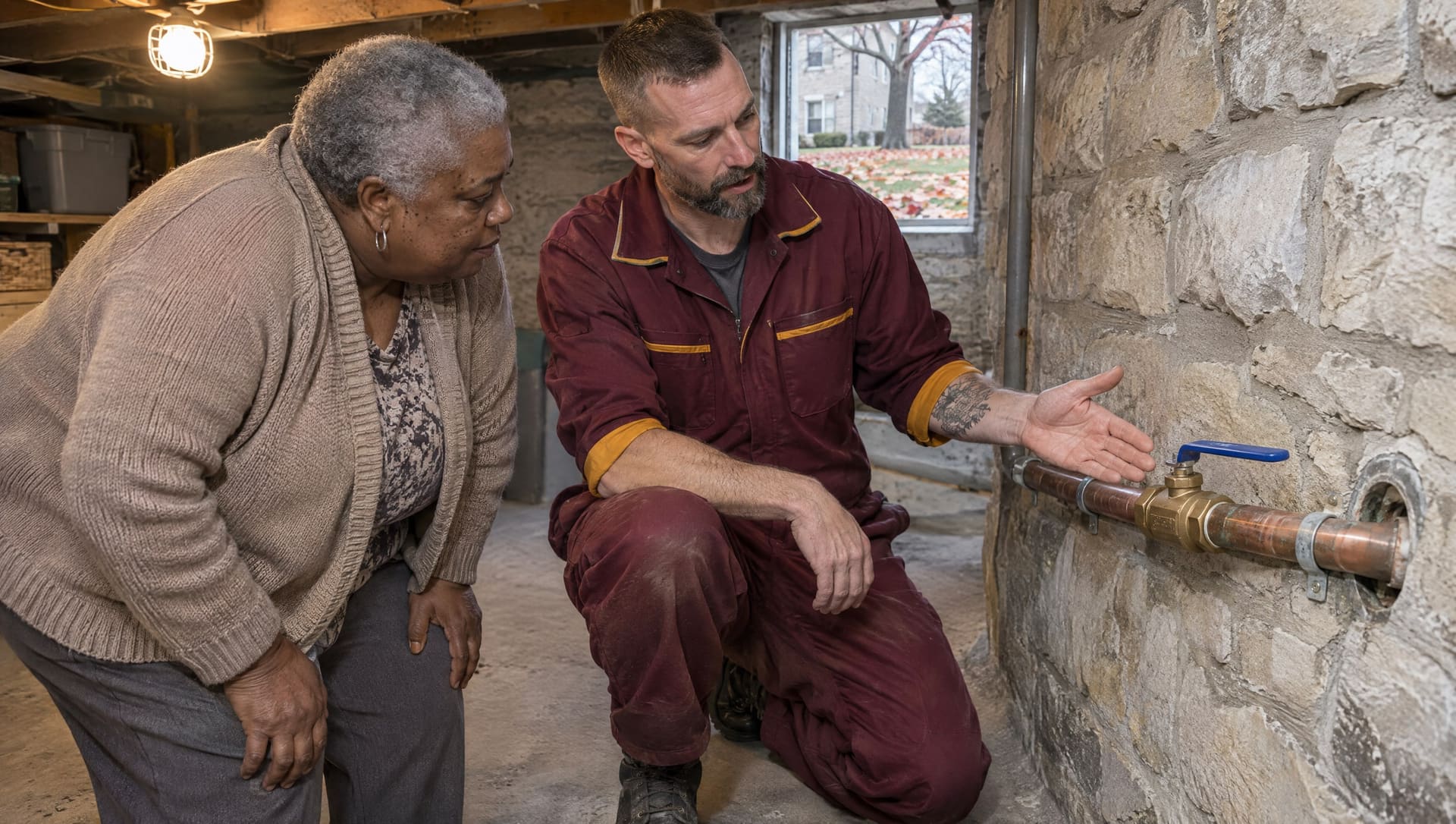
If water is leaking while you read this, stop the water first. Find the main shut-off valve where the water line comes into the basement and turn it clockwise until it stops. Stay away from any outlet or light fitting near the water. You can work out who should do the repair once the water is off.
This guide covers who may do plumbing work on an Ontario home, which jobs a homeowner can take on, where the rules stop you, and how to check a plumber before you let anyone start.
Does a plumber need a trade certificate in Ontario?
Yes. Plumbing is a compulsory trade in Ontario. To practise it, a person must hold one of the following:
- a Certificate of Qualification
- a Provisional Certificate of Qualification
- a Registered Training Agreement as an apprentice
They must also appear on the Skilled Trades Ontario Public Register. You can search that register by name, which makes it the simplest check you can do before someone starts work in your house.
The rules for the work itself are in Part 7 (Plumbing) of Ontario's Building Code, Ontario Regulation 163/24. The Code sets out how drains, vents and water lines are designed and installed. A person with a Certificate of Qualification has been trained and tested against those rules.
Are you allowed to do your own plumbing in Ontario?
The compulsory trade rule covers people who practise plumbing as a trade. The Building Code and the permit rules cover the work itself, whoever does it.
Under the Building Code Act, 1992, a permit from the municipality's chief building official is needed to construct a building, and the Act's definitions include installing, extending, or materially altering or repairing plumbing. In practice, new plumbing and changes to drains generally need a building permit. The City of Guelph's building department decides each job, so call them before you start anything bigger than a small fix.
As a general guide, these small jobs are usually within a careful homeowner's reach:
- replacing a tap washer, cartridge or toilet flapper
- clearing a sink or tub trap
- replacing a supply hose on a washing machine
The jobs below need more thought before you start, especially in an older Guelph house.
### The water line in older houses
The oldest homes in the city were built from the 1850s to the early 1900s. They are in St. George's Park, Exhibition Park, St. Patrick's Ward (The Ward), and the Brooklyn and College Hill heritage district. Houses of that age in Ontario usually started out with a lead or galvanized steel water line.
Before you cut into the supply, find out what it is. The City of Guelph offers these lead programmes:
- a lead test of the tap water in homes built before the mid-1950s, at no cost through the City
- replacement of any lead pipe between the water main and the property line
- a grant toward replacing the lead pipe on your side of the property line
- a rebate on qualified water filters
Ontario's drinking water standard for lead is a maximum of 0.010 milligrams per litre. Repairs on these lines are covered on our plumbing repairs page.
### The sewer pipe to the street
In Guelph, you as the owner are responsible for the building sewer and the private drain all the way to the main sewer under the street. The post-war bungalows and storey-and-a-half houses near Speedvale, Willow West, Stone Road and south of College Avenue often have a clay or bituminous-fibre sewer pipe. Fibre pipe can go out of round or collapse, and clay can let roots in at the joints. Only City crews may clear a blockage in the main sewer itself.
Before anyone digs, a locate must be requested through Ontario Dig Authority (formerly Ontario One Call). There is no charge for the request. Public locates do not mark your own private sewer line, so whoever digs still has to find it. More detail is on the sewer repair and backwater valves page.
### Backwater valves
Ontario's Building Code (Article 7.4.6.4.) requires a backwater valve in construction where a drain may be subject to backflow. That includes fixtures below the level of the adjoining street, and fixtures below the upstream sanitary manhole cover in a house on a public sewer.
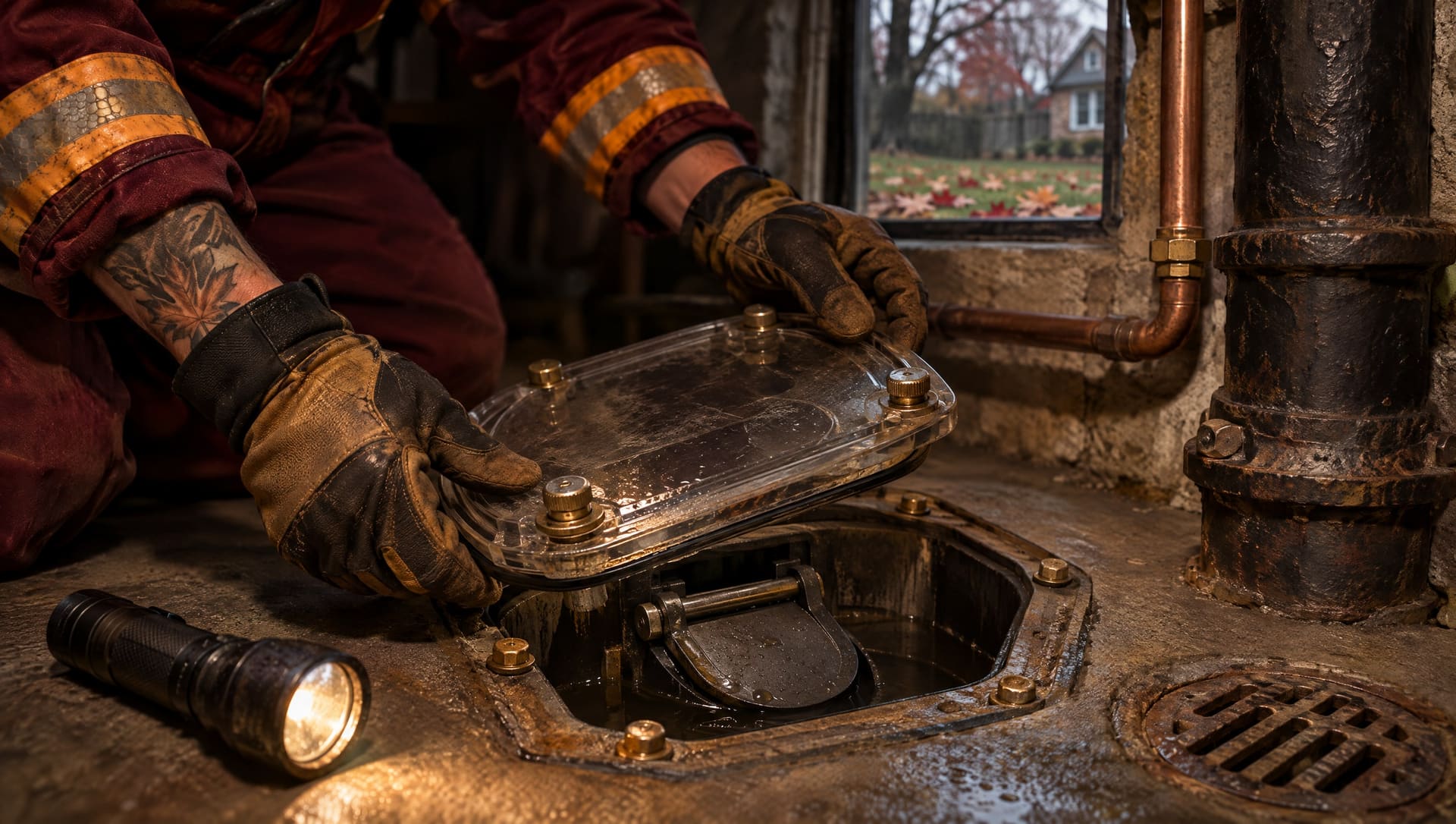
Many older Guelph basements have a floor drain that runs straight to the sewer. Fitting a valve on that line means cutting into the building drain, so it is permit work. Our sewer backup guide explains why that drain matters when it rains hard.
Am I allowed to install my own water heater?
It depends on the fuel.
For a gas water heater, the answer is no. In Ontario, fuel-fired appliances such as gas water heaters must be installed and serviced by a contractor registered with the Technical Standards and Safety Authority, using gas technicians who hold the right certificate. The rule is Ontario Regulation 212/01 (Gaseous Fuels). It covers the gas connection and the appliance itself, including servicing as well as new installations. If the burner, the gas valve or the venting needs work, leave it alone and call.
With an electric water heater, the water side is still plumbing. The tank connects to your supply and needs a relief valve that drains safely. Ask the building department whether your job needs a permit. The wiring is a separate matter. If you are not sure about it, leave it to someone who is.
Whatever the fuel, a few points apply in Guelph:
- Guelph's tap water comes from the ground. It is hard, with plenty of dissolved calcium and magnesium, and that builds scale inside tanks and tankless units. A softener or conditioner changes how much scale forms, so tell your installer if you have one.
- The Building Code (Article 7.2.10.7.) limits water from a shower head or into a bathtub to 49 °C. Set the tank and any mixing valve with that limit in mind.
- Read the manufacturer warranty terms before you install a tank yourself. Some manufacturers make their coverage depend on who did the installation.
The water heaters page covers repair and replacement in more detail.
What questions should I ask a plumber?
A good plumber will expect these questions and answer them plainly.
- What name are you listed under on the Skilled Trades Ontario Public Register? Then look it up yourself.
- Will I get the price in writing before work starts? You should see the number and approve it before any part is fitted.
- Does this job need a permit, and who is applying for it? Agree on this before the work begins.
- For gas work: is your company registered with the Technical Standards and Safety Authority, and who will do the gas part of the job?
- If there is digging, who requests the locate, and how will you find my private sewer line? The public locate will not mark it.
- Can you show me what the camera sees? For a drain or sewer problem, footage of the pipe tells you whether it is a blockage or a broken pipe.
- Is this pipe mine or the City's? In Guelph, the private drain to the main is yours. The main under the street is not.
- What happens if the repair does not hold? Get the answer in writing along with the price.
A short note on who does the work here
Work is performed by licensed plumbers (306A Certificate of Qualification) at Guelph Plumbing Co. Gas work is performed by TSSA-certified gas technicians. More answers are in the FAQ.
If you have a leak, a slow drain or a line you are not sure about, our plumbing repairs page explains how we handle the visit.