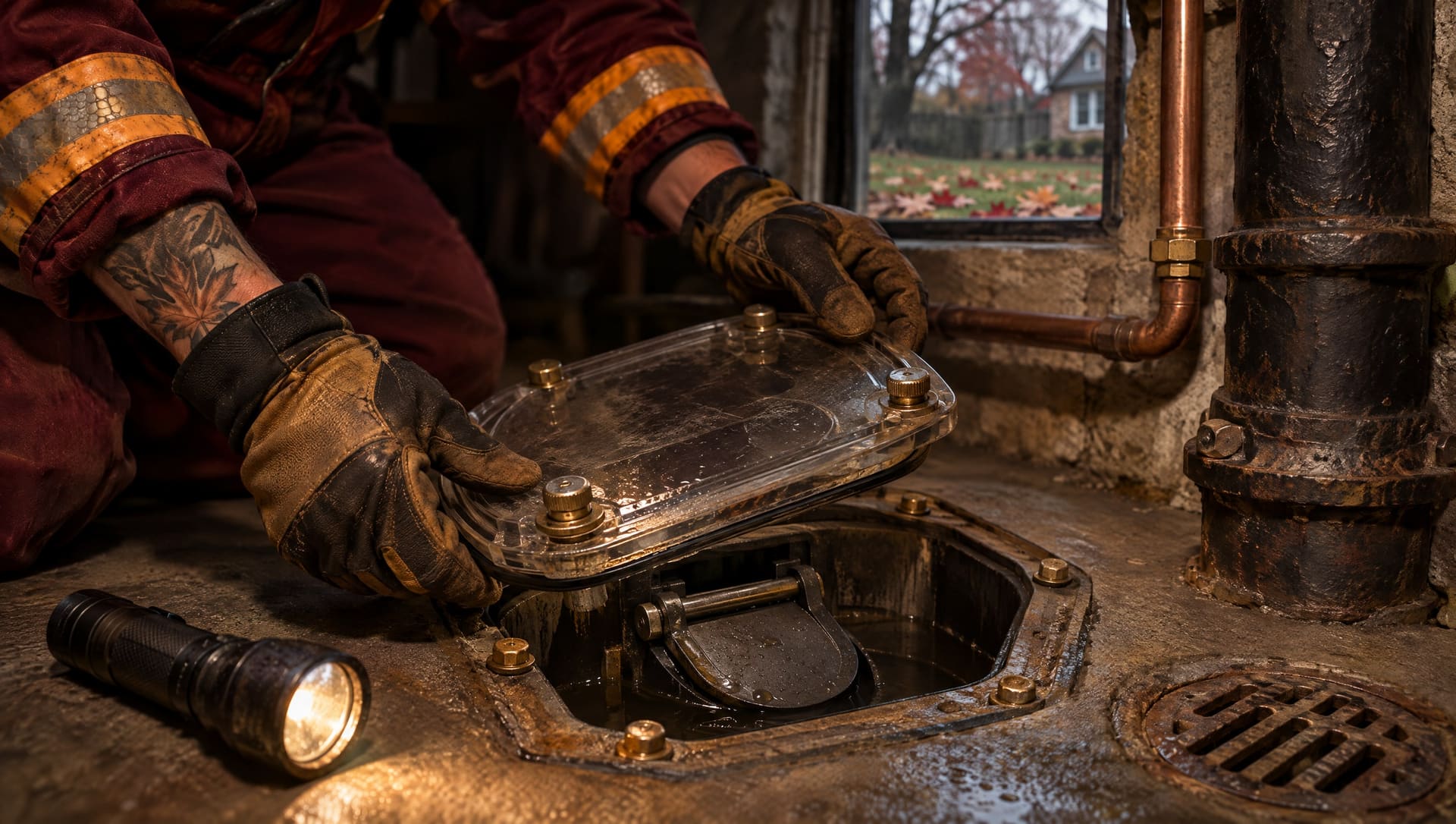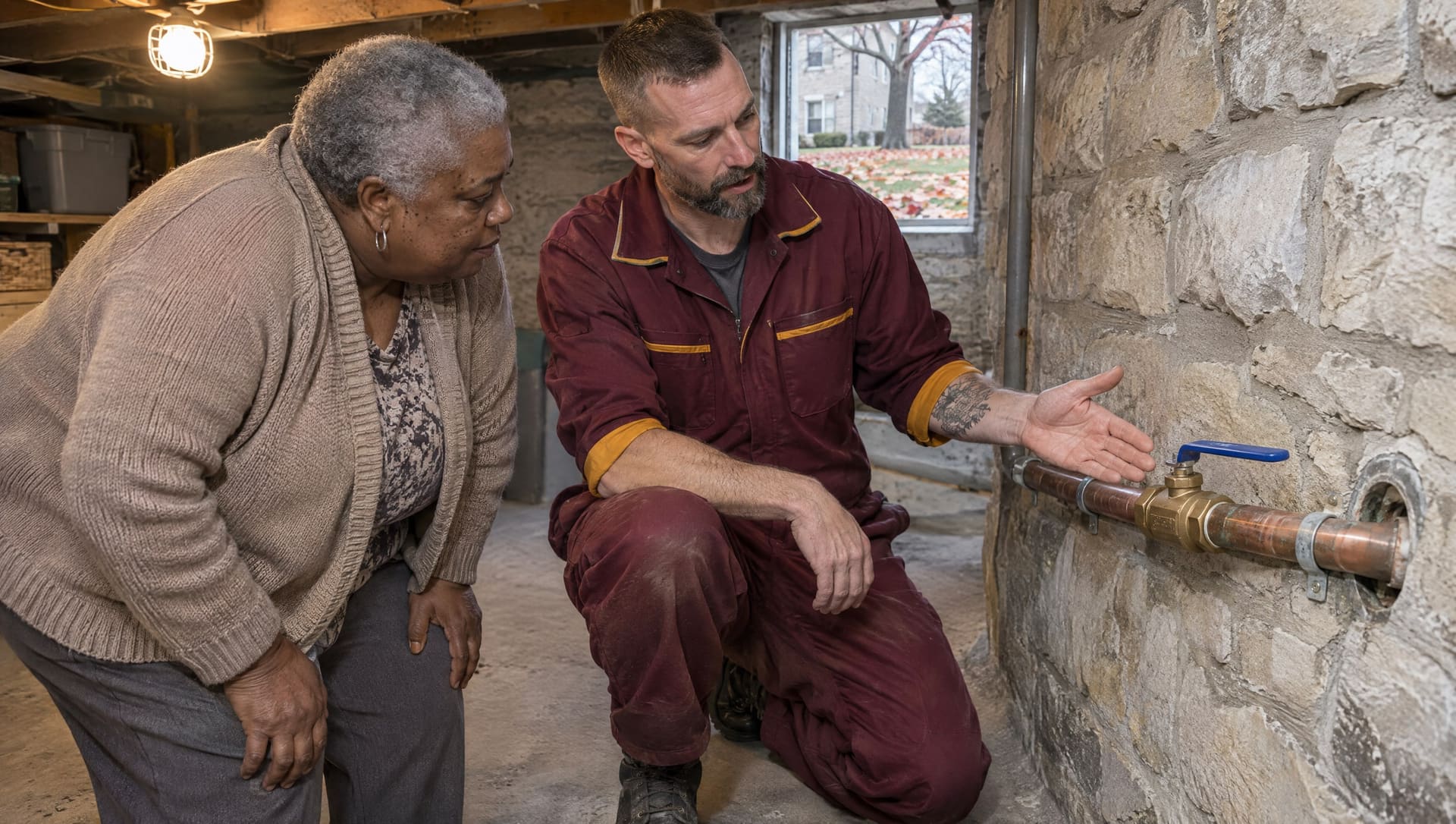
If a tap gives you nothing on a cold morning, start by finding your main shut-off valve. It is usually where the water line comes through the basement wall, near the meter. You don't need to close it yet, but if you know where it is, you can stop the water quickly if a pipe splits while it thaws.
Most frozen pipes thaw without any damage. The work is in finding where the ice is, warming it gently and watching for a leak.
What should I do first if I think a pipe has frozen?
- Leave the tap you tried open. When the ice melts, the water needs somewhere to go, and running water speeds up the thaw.
- Find the main shut-off valve and check that it turns. If you see water spraying or dripping anywhere, turn it clockwise until it stops.
- If there is water near an outlet, a light fitting or the electrical panel, keep away from it. Only switch off the breaker if you can reach the panel while standing somewhere dry.
- Never use an open flame on a pipe, whatever it is made of.
How do I know if my water pipes froze?
A frozen pipe usually shows itself in one of these ways:
- One tap gives no water or a thin trickle while the others work normally
- A toilet doesn't refill after you flush it
- Frost on a pipe you can see, or a section of pipe that bulges or looks swollen
- No water anywhere in the house, which points to the line where it comes in from outside or to the area around the meter
Pipes freeze where cold air reaches them. Look at outside walls, sink cabinets on outside walls, crawl spaces, unheated garages, outdoor hose taps and the spot where the water line comes through the foundation.
The kind of pipe you have depends a lot on when the house was built. Older houses in St. George's Park, Exhibition Park and The Ward often still have a lead or galvanized steel water line. Over the years, steel pipe corrodes from the inside and the opening gets narrower, so a small amount of ice can block it completely. Lead is soft and splits easily, so it needs extra care. Post-war bungalows near Speedvale and Stone Road usually have copper water lines. Copper is strong, but it can split along its length when the water inside freezes and expands.
How long can pipes be frozen before they burst?
Nobody can give you a safe number of hours. It depends on how cold it is, what the pipe is made of and how much water is trapped behind the ice. The split usually isn't where the ice is. Pressure builds in the water trapped between the ice and a closed tap, and the pipe gives way somewhere along that stretch.
Many splits only show up once the ice melts and water starts moving again. That is why you keep the tap open, stay close by while the pipe thaws and keep your hand near the shut-off valve.
How do I thaw a frozen pipe safely?
If you can see and reach the pipe:
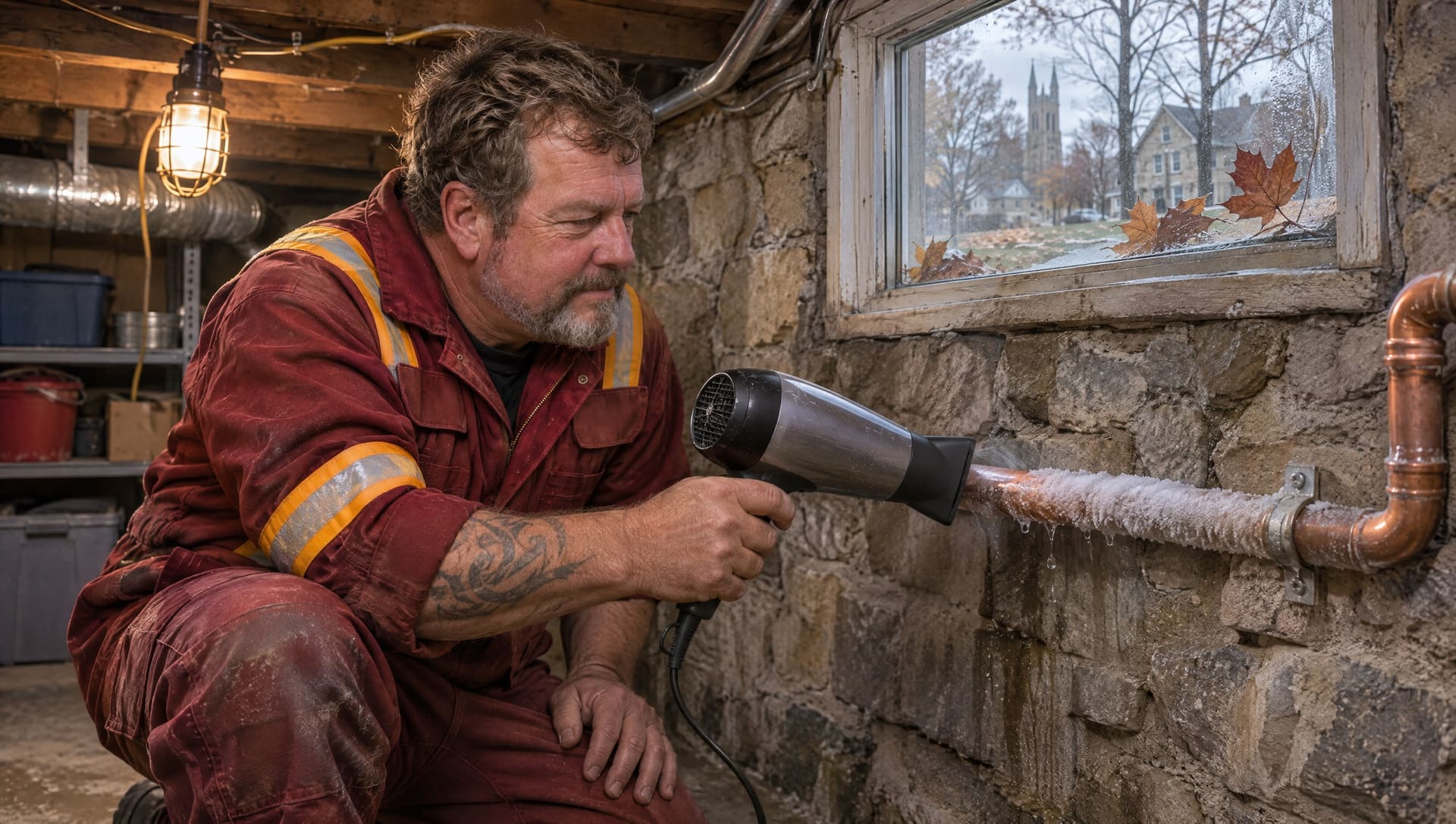
- Open the tap the pipe supplies, then warm the pipe starting at the tap end and working back toward the frozen section. That way the melting water can drain away.
- Use a hair dryer, warm wet towels or a heating pad. If you use a space heater, keep it well away from the water and from anything that could catch fire, and don't leave it running on its own.
- Open the cabinet doors under the sink so warm air from the house can get in.
- Don't use a torch, an open flame or boiling water. Heat a pipe too quickly and the joints can crack, the solder can melt or a fire can start inside the wall.
If the frozen section is inside a finished wall, under a floor or underground, don't try to reach it yourself. Call a plumber. If it is lead or old steel pipe, a plumber can also tell you whether it should be replaced once it has thawed. The City of Guelph has a lead programme for houses built before the mid-1950s. Plumbing repairs explains how it works.
Why can a Guelph pipe stay frozen into spring?
The City of Guelph says frost retreats slowly, usually from the top down, so a frozen water pipe may not thaw until well after spring has arrived. The lawn can be green while the soil around a buried line is still frozen. If your water comes back weak or not at all in late winter, frost underground may be the cause.
The City asks properties with a history of frozen pipes to run a small amount of water through the winter months. If your house has frozen before, follow that advice, and talk to a plumber about how the line comes into the house.
How do I unfreeze my well water pipes?
In Puslinch, including Morriston and Aberfoyle, homes get their water from their own wells and septic systems. When the taps stop on a well property, the first step is different:
- Turn off the breaker for the well pump. A pump that keeps running against a frozen line can overheat or run dry.
- Check the pressure gauge near the pressure tank. If it reads nothing, the problem is usually between the well and the tank.
- Look for the ice in the parts you can get to: the line where it comes into the house, the pipe around the pressure tank, and the small tube going into the pressure switch, which freezes easily. Warm these gently, the same way as above.
- If the line between the well and the house is frozen underground, call a plumber. Don't dig. Ontario requires a locate request through Ontario Dig Authority before anyone digs, and public locates don't mark private lines such as your own water or septic lines.
Once the water is flowing again, turn the pump back on and watch the pressure come up. Check the pump and the tank for leaks.
How do I stop my water pipes from freezing?
- Before the first hard frost, shut off and drain your outdoor hose taps from the valve inside the house, then leave the outside tap open.
- Seal draughts where pipes go through outside walls and the rim of the foundation.
- Put foam pipe insulation on pipes in crawl spaces, garages and other unheated areas.
- On the coldest nights, open the cabinet doors under sinks on outside walls.
- If you are going away, leave the heat on and ask someone to check the house. For a longer absence, think about shutting off the main valve and draining the lines.
- If a pipe or a well line has frozen before, ask about heat cable rated for that use, or about moving the pipe away from the cold wall. New pipe runs and changes to drains generally need a building permit, and the City's building department can tell you whether your job does.
Who do you call when a water pipe bursts?
Do these first:
- Shut the main valve, then open the lowest cold tap in the house to drain what is left in the lines.
- Keep away from water near electrical fittings, and stay out from under a ceiling that is sagging with water.
- Move what you can off the floor, and take photos for your insurer before you clean up.
Then call a plumber. In Ontario, plumbing is a compulsory trade, so ask who will be doing the work. With Guelph Plumbing Co, work is performed by licensed plumbers (306A Certificate of Qualification), and you get a written price to approve before any work starts. If water is coming up through the floor drain instead of out of a pipe, the cause is different. Our guide to sewer backups explains what to do.
If a pipe has split or you can't find where the ice is, see our emergency plumber page.